The Function Of Hplc Evaluation In Peptide Characterization
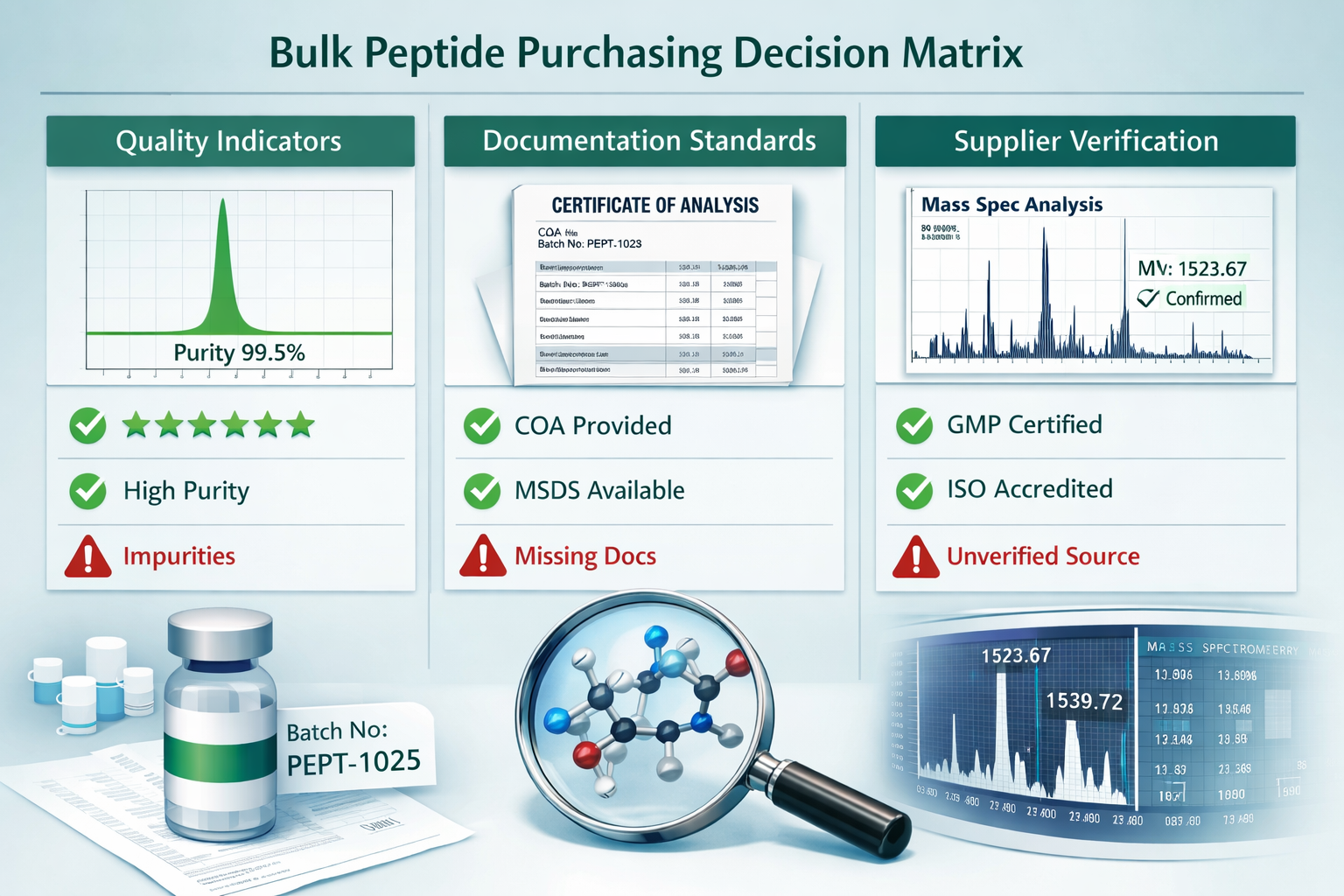
#hplc #ms #testing #reports Olga Liao They are not intended for human consumption, healing usage, or any type of form of self-administration. Any kind of referrals to research searchings for, professional studies, or prospective applications are offered exclusively to inform the scientific community and do not comprise clinical claims. Mass spectrometry supplies molecular-level confirmation that the major chromatographic peak matches the anticipated peptide mass. Batch-specific testing means that every manufacturing run undergoes independent evaluation rather than relying upon historical testing from previous sets. Each set obtains a Synthetic Peptides distinct identifier that connects it to details COA outcomes.
Just how much does peptide HPLC testing expense?
The price of peptide analysis service differs significantly based upon which strategies your governing package calls for: HPLC-UV Evaluation: $& #x 24; 300 & #x 2013; & #x 24; 800 per example (standard pureness assessment) LC-MS (Fluid Chromatography-Mass Spectrometry): $& #x 24; 600 & #x 2013; & #x 24; 1,500 per example (molecular weight confirmation).
How Does Confirmed Peptides Make Sure Top Notch Analytical Results?
Mass spectrometry validates molecular identification by examining whether the measured mass matches the expected peptide mass.Additionally, NEBA has significant infrastructure and decades of knowledge in qualitative and measurable separations making use of HPLC mass spectrometry detection of peptide medications.MS is particularly valuable for finding contaminations that co-elute (substances that are not fully separated) throughout chromatography.Amino acid evaluation or other quantitative methods can sustain absolute web content.
In functional COA testimonial, the term generally refers to pureness screening, identification testing, and documents review. Purity testing asks how much of the spotted sample is the primary peptide versus relevant contaminations. Identification screening asks whether the gauged mass or sequence-related proof matches the intended peptide. Documents review asks whether the record is batch-specific, deducible, and detailed sufficient to be investigated.
Peptide Study Reference: Reconstitution, Pureness, Receptor, And Storage Terms
When you choose Emirates Peptides, you select confidence in your study materials. HPLC separates the elements of a peptide example based on their chemical properties as they travel through a specialized column under high pressure. A detector measures each component as it departures the column, generating a chromatogram-- a graph of the example's structure.
Just How Pureness Is Computed
HPLC procedures chromatographic purity by separating the target peptide from related contaminations and calculating main-peak location percent. Mass spectrometry verifies molecular identity by examining whether the measured mass matches the expected peptide mass. For research-grade peptide qualification, HPLC and LC-MS/ESI-MS answer different inquiries and ought to read together. Understanding just how to evaluate peptides for pureness makes certain the integrity and reproducibility of every study protocol. This overview clarifies the 3 gold-standard analytical methods-- HPLC, mass Additional resources spectrometry, and third-party screening-- and exactly how scientists can analyze outcomes to validate that their substances satisfy research-grade top quality standards. Without orthogonal methods to find these microheterogeneities, they increase in a system (passing as 'organic irregularity'), decreasing signal-to-noise and eventually revoking whole data collections. Formal HPLC/MS characterization freezes that worsening in place, subjecting each molecule to 2 orthogonal selection pressures (hydrophobicity and mass-to-charge), producing a statistical firewall around incorrect identification. Typical purity levels range between 99.0% and 99.7%, lining up with international laboratory study standards. These tests validate that peptides from Peptides Laboratory UK include no pollutants, degradation byproducts, or undesirable fillers-- simply confirmed, high-purity research study material.